|
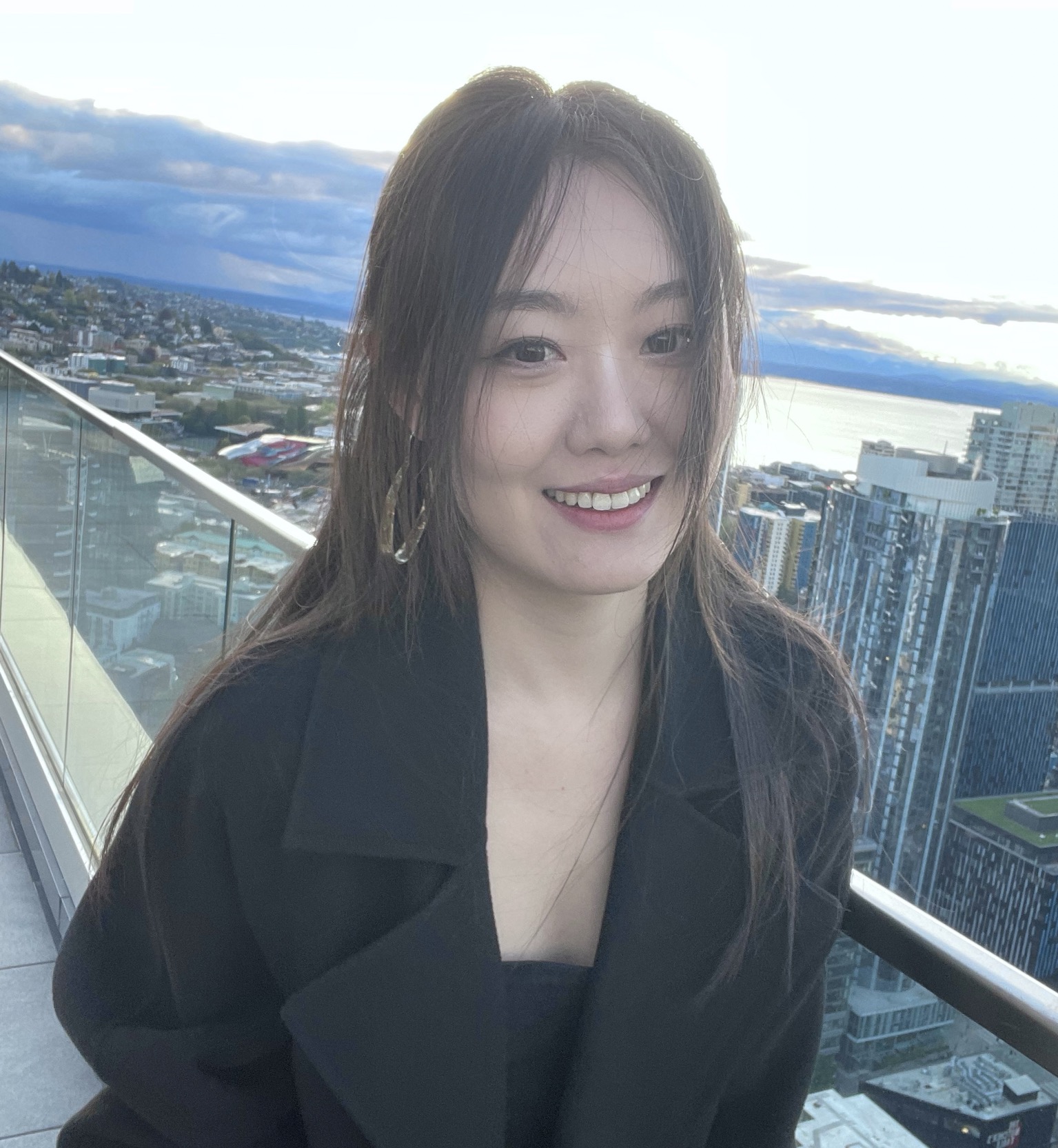
Qijia He (何其佳)
|
|
I am a final-year PhD student in the Department of Statistics at the University of Washington, advised by Prof. Bo Zhang. I collaborate with Prof. Ranjay Krishna at the UW CSE RAIVN Lab on multimodal AI research. Before graduate school, I received my B.S. in Statistics from Sun Yat-sen University. I have also interned at  Google, Google,  TikTok and TikTok and  Apple. Apple.
I build LLM & VLM agents through post-training, spanning on-policy distillation, agentic reinforcement learning, and capability-aware data curation. My research focuses on enabling agents to learn stably and efficiently from their own experience, toward reliable long-horizon reasoning, tool use, and multimodal generation in open-ended, real-world environments.
I am currently seeking full-time industry opportunities starting in 2027. Please feel free to reach out for any relevant opportunities!
Contact me: heqj3@uw.edu
|
LLM / VLM
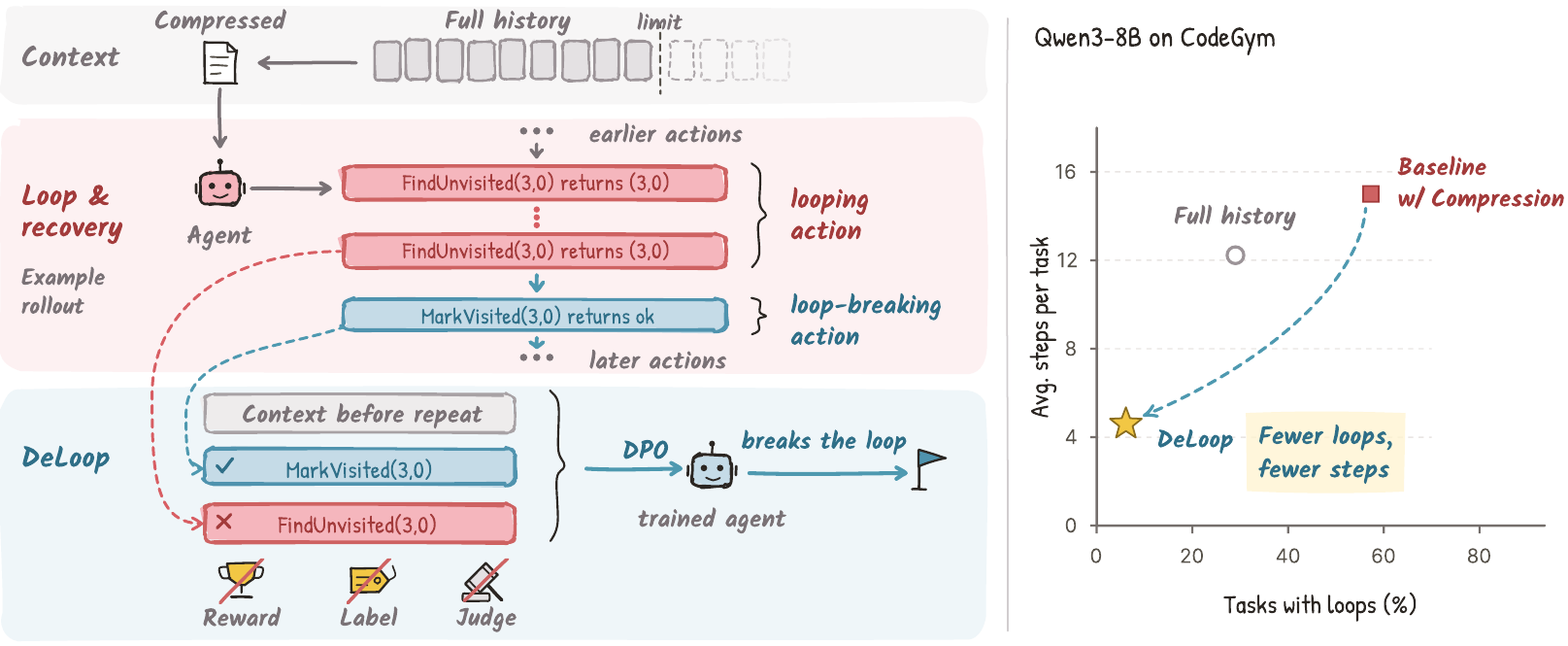 |
DeLoop: Repeated Actions as Self-Supervision for Long-Horizon Agents
Tianle Chen, Pushkar Singh, Ketan Todi, Biswajit Paria, Qijia He, Wenqi Wang, Yuwen Tan, Jike Zhong, Sugato Basu, Deepti Ghadiyaram, Arjun Akula
Preprint, 2026
[Paper]
|
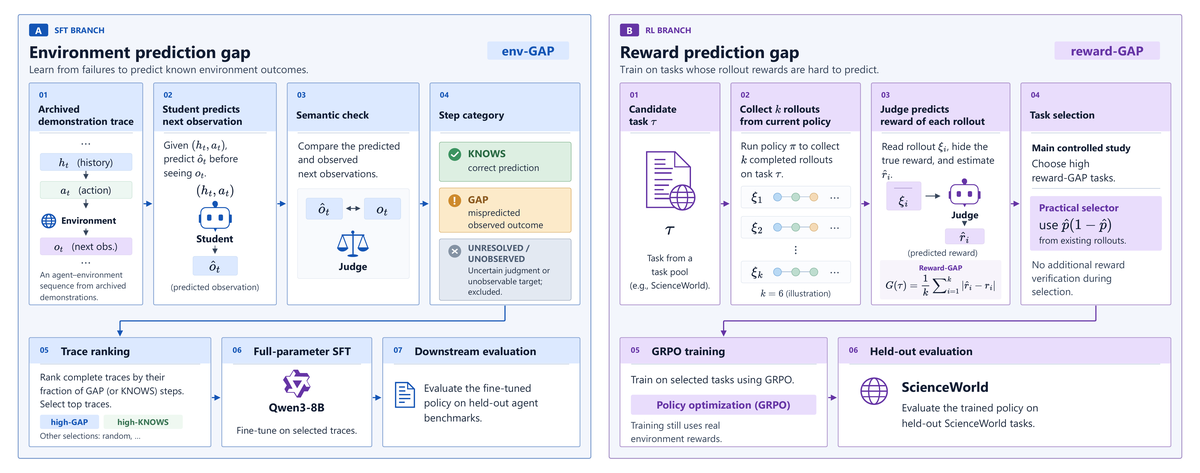 |
Agent Capability Shapes the Value of Post-Training Data
Jiayi Cheng, Yunshu Wu, Chenqian Le, Qijia He, Runhao Li, Michael Yue, Xupeng Chen, Michal Mankowski
Preprint, 2026
|
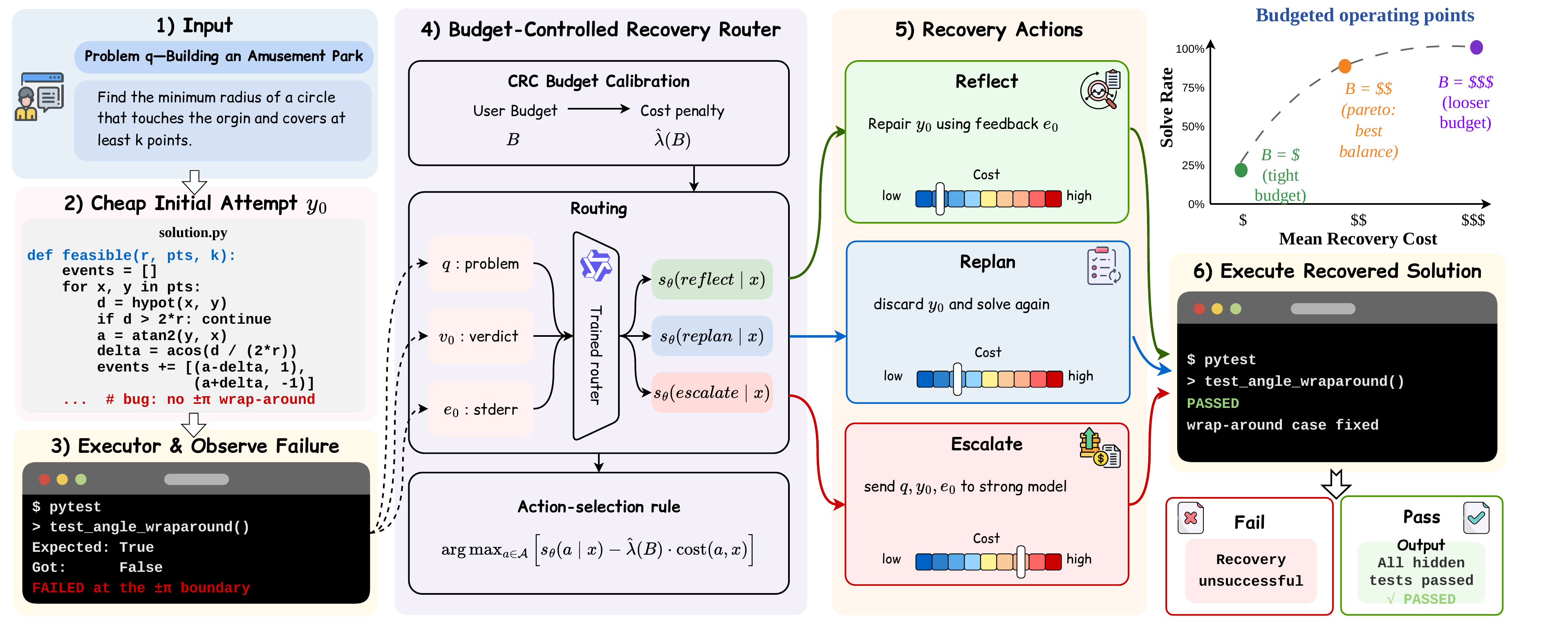 |
ARCHER: Adaptive Recovery Routing with Conformal-risk Calibration for Coding Agents
Qijia He, Jiayi Cheng, Chenqian Le, Rui Wang, Xunmei Liu, Yixian Chen, Jie Mei, Zhihao Wang, Xupeng Chen, Yuhuan Chen, Tao Wang
Efficient Reasoning @ COLM 2026 Spotlight
[Paper]
[Code]
|
Causal Inference
|
 |
Software Engineer Intern (PhD), Summer 2026
Google, New York, NY
Research on on-policy distillation in LLMs
|
 |
Machine Learning Intern, Spring 2026
TikTok, Bellevue, WA
Worked on agentic AI systems for e-commerce applications
|
 |
Machine Learning Intern, Summer 2025
Apple, Cupertino, CA
Worked on causal machine learning methods for ads marketplace
|
 |
Department of Statistics, University of Washington
- STAT 311 Elements of Statistical Methods (Winter 2024, Autumn 2025)
- STAT 513 Statistical Inference (Winter 2026)
- STAT 435 Introduction to Statistical Machine Learning (Spring 2026)
|
 |
Academic tutoring center, School of Mathematics, Sun Yat-sen University
Tutor in Mathematical analysis (Fall 2018)
|
 |
TAL Education Group
Teaching Assistant in primary-school Olympiad Mathematics (2017-2018)
- Rated S (top 5% performance)
|
|